

By Peyman Sabri · Last updated 2026-10-31
Exhibitors come back when they can show what the event gave them. Research points to satisfaction with the show as the key reason exhibitors return, and to a gap between saying “we’ll be back” and actually booking. The organisers who close that gap give exhibitors proof they can take home: film, images and clear signs of who they met.
I’m Peyman Sabri, a Stockholm-based content producer and motion designer at Peyman Sabri Media. I film events and trade fairs and think about the communication around them, which is why this question keeps coming up in my work.
Why don’t exhibitors come back?
Usually because the experience did not feel worth it, or because nobody could show that it was.
The first part is about the show itself: the visitors, the setting, the support. The second part is about what happens after. A stand team can come home happy and still lose the argument for next year, because the person who decides was not there.
Both parts can be worked on. This post is mostly about the second.
What does research say about exhibitors returning?
Two sources are worth knowing.
Satisfaction drives the actual decision. A study by Michael Reinhold at the University of St. Gallen surveyed 313 of the 642 companies exhibiting at a large annual trade fair in Switzerland, and then looked at who actually came back. Satisfaction with the trade fair was the key factor behind re-exhibiting. The study also found that exhibitors’ stated intention to return was not a useful stand-in for what they actually did.
The same study found that the link between satisfaction and returning depends on the exhibiting company’s own decision process, including its strategy and how far its head office is from the venue.
Exhibitor advocacy tracks growth. In the Global Exhibitor Insights report from UFI and Explori, based on post-show surveys from more than 1,000 trade shows, the global exhibitor Net Promoter Score was −17. Among shows with a positive exhibitor score, 71% were growing their exhibitor numbers. Among shows with a negative score, 32% were.
Shows growing their exhibitor numbers (UFI/Explori, 2017)
71%
of shows with a positive exhibitor Net Promoter Score.
32%
of shows with a negative exhibitor Net Promoter Score.
That is a correlation, not proof of cause. But together the two sources point the same way: how exhibitors feel about the show, and what they say about it afterwards, matters more than a checkbox in a survey.
Who decides whether an exhibitor comes back?
Often someone who never saw the stand. A manager, a marketing lead or a board looks at a list of events and asks which ones were worth it.
The stand team has a feeling. The decision-maker has a spreadsheet. If the feeling never becomes something concrete, the spreadsheet wins.
That is where organisers can help, and where most of them stop too early. A thank-you email and a visitor number are not much to argue with.

What can exhibitors show internally after the event?
Give each exhibitor a small package of proof. It works best when it is about them, not about the event in general.
A proof package for each exhibitor
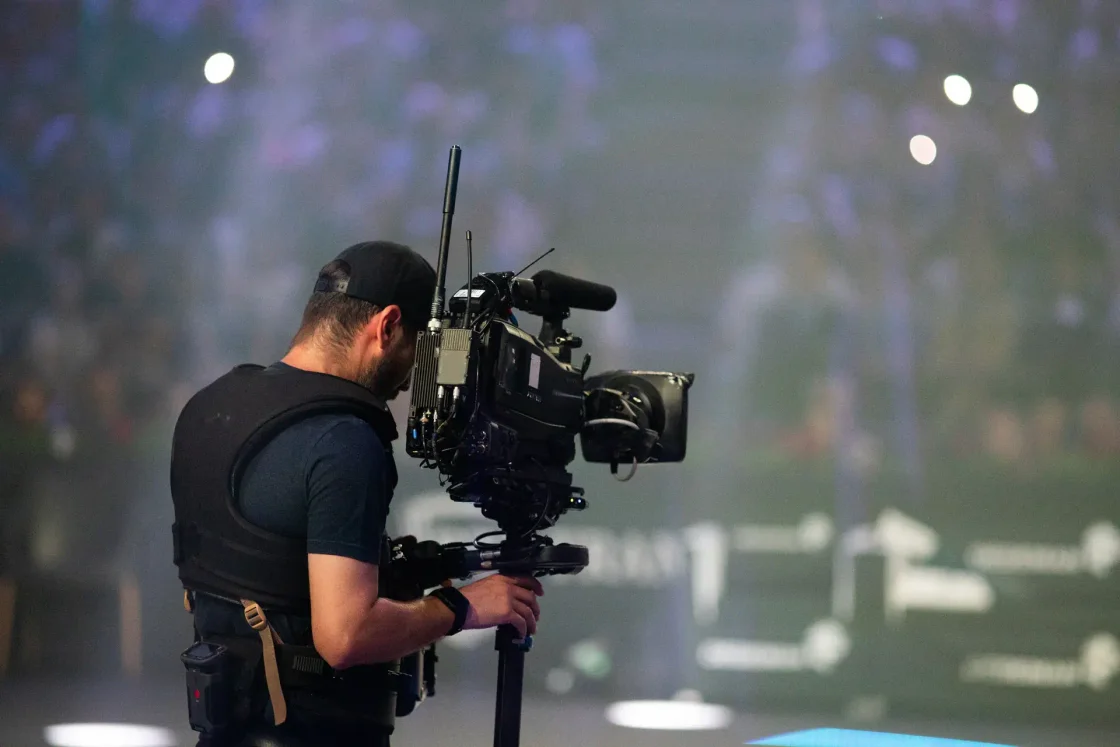
- A short film from their own stand. Thirty to sixty seconds of people, conversations and activity. Easy to forward and easy to post.
- Photos they are free to use. Their stand, their team, their visitors, cleared for their own channels.
- Clips from talks they took part in. One idea per clip, with name and title on screen.
- A short summary. Who the visitors were, in words a manager understands.
The film matters most, because it travels. A manager who watches a clip from the stand has seen the event, not just heard about it. It is easier to say yes to something you have seen.
It also gives exhibitors content for their own channels, which spreads the event to people the organiser would never reach alone.
How should you measure whether exhibitors return?
Measure behaviour, not only intention.
- Before the event: agree what a good show looks like for each exhibitor type.
- Right after: ask the four questions the UFI and Explori report builds on: how satisfied exhibitors are, how likely they are to recommend the event, how likely they are to return, and how important the event is to them.
- When booking opens: track who actually rebooks, and compare with what they said.
- Over time: look at which exhibitors received a proof package and how their rebooking compares.
The St. Gallen study is the reason for the third step. If you only ask whether people plan to come back, you are measuring the wrong thing.
What does this look like in practice?
A practical setup for a two-day conference or trade fair:
- One filmmaker or a small team works from a list of exhibitors, with a short slot planned at each stand.
- Speaker clips are planned with the programme, so every talk gets at least one usable moment.
- Short stand films are delivered within days, while the event is still fresh for the exhibitor’s manager.
- The organiser’s own aftermovie uses the same material, so nothing is filmed twice.
None of this replaces a good show. It makes a good show visible to the people who decide on the next one.
Frequently asked questions
Why don’t exhibitors come back to a trade fair?
The most consistent reason in research is low satisfaction with the show. It is also common that the person who decides on next year was not at the stand and has little to judge the event by.
How do you measure exhibitor satisfaction?
Ask about satisfaction, willingness to recommend and intention to return after the show, then compare with who actually rebooks. Research from St. Gallen shows that stated intention alone is not a reliable stand-in for what exhibitors end up doing.
What can an organiser give exhibitors after the event?
Material they can use internally and publicly: short films and photos from their own stand, clips from talks they were part of, and a summary of who came. It turns a feeling into something they can show.
How can film help exhibitors justify the next year internally?
A short clip from their own stand shows a manager who wasn’t there what happened: the people, the conversations, the energy. It is easier to say yes to something you have seen.
If you run a trade fair or conference and want to plan film for your exhibitors, write to me at hello@peymansabri.com.